

The dead simple way I shop with intention
Doing the bare minimum, thoughtfully.

The last time I wrote about my system for shopping planning—wow, almost exactly 4 years ago—I was still dreaming of a perfect little app that would be extremely easy to use and good with text, visuals, and links.
Fast forward to today, I’m more time-crunched than I’ve ever now that I have a little one to look after… and I’m no longer hunting for a new app or site or special shopping tool of any sort. I want as few barriers and layers and things to maintain as possible, while still keeping space for exploring and mulling over purchases.
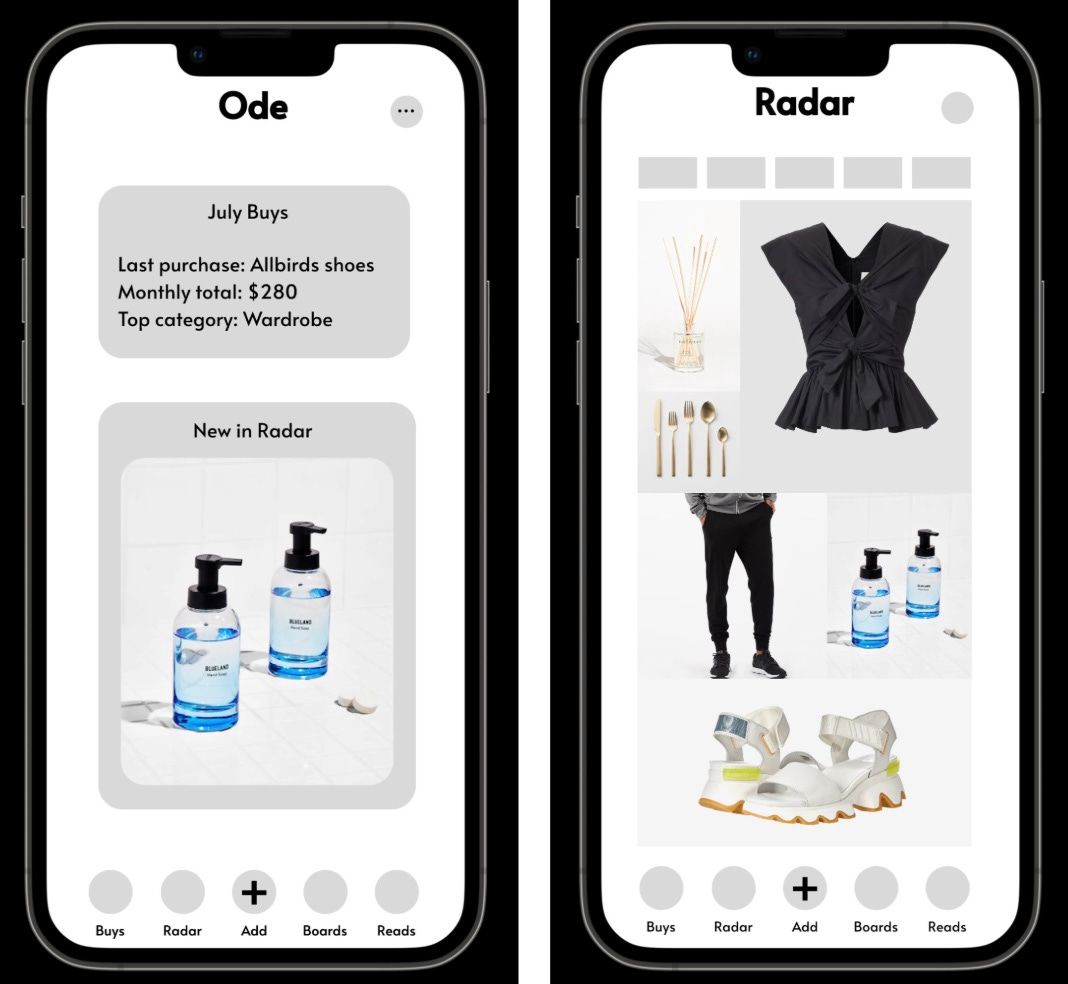
What I do now is the 2-step flow below, with an optional 3rd step when needed. This is how products go from “wishlist” to “purchase” for me for clothes, home stuff, kid stuff… basically everything except groceries (which is a separate endeavor that I’ll be writing more about in my other newsletter on trying to eat well as a family.)
1. Intent
What I used to do: a dedicated note for “Shopping” in the Notes app , where I list things I might be interested in under different categories.
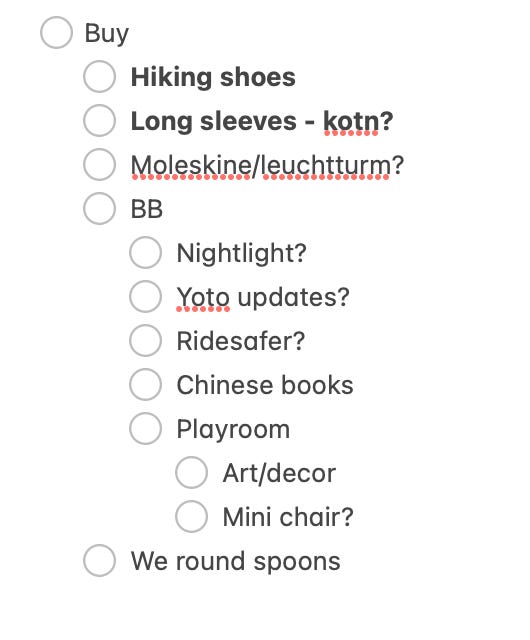
What I do now: just one central to-do list note, titled “⭐ Priorities”, that includes all the (non-work-related) top-of-mind stuff to make progress on (household, medical, personal finance, etc.) And somewhere in there is a nested checklist for “Buy”, where I’ll put things I need or want to shop for. When something is more urgent, I’ll bold it, so I know this is the next thing I have to act on.
2. Consideration
Step 2 is when I’m actively exploring options for those priority buys in step 1. As much as I would love to keep a more visually-driven wishlist of sorts, I’ve realized that the least friction-y way to keep tabs on products is to literally keep those tabs open and prune regularly.
What it means in practice is dedicating a single browser window for all products I’m seriously considering (meaning: decent likelihood of buying). I’ll keep them open for as long as I still think there’s a good chance I’ll buy them in the near term. Obviously I’ll close the tab if I bought the thing or have decided against it for whatever reason. This way, the product details are already there whenever I have a second to think about whether to make the purchase, and I can buy right away when I decide it’s time. (P.S. This long-sleeve from KOTN has been an open tab for a while and I think the time might be nigh!)
3. Save for later
First of all, I think every shopping cart on the internet should have a “Save for later” button. It’s such an easy off-ramp for impulse shopping (hmm maybe that’s why they don’t have it). My centralized DIY solution: a Google deck. I keep the deck open in the browser window that has all the shopping links. Whenever there’s something I think is promising but not a priority, I’ll put it in the deck.
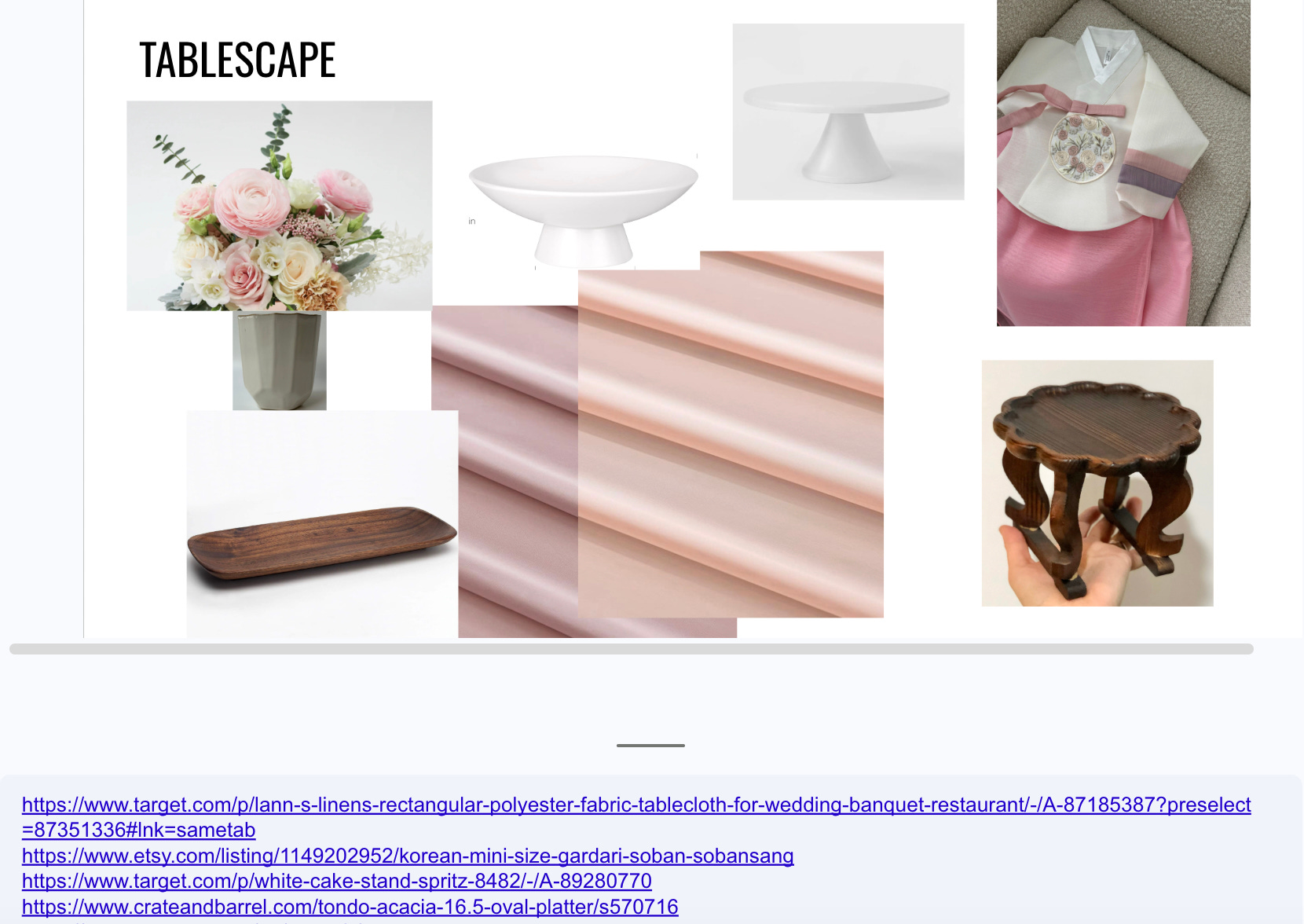
What I like about the deck is that it has a nice balance of structure and flexibility. The structure comes from the individual slides, which I can designate for different things (spring/summer clothes, home, daughter’s bedroom specifically, etc.). The flexibility comes from being able to just quickly drop links in the speaker notes of a slide (where I usually stop) or, if I want to do more of a moodboard and evaluate how things look together (especially helpful for home/decor), I can do a quick collage of images right above.
And that’s that! Obviously things can jump straight to step 2 without step 1, or step 3 without step 1 and 2, but overall, my purchases go through this flow.
What do you think? Do you find yourself craving an “everything shopping planning and tracking app” or does my current approach resonate?
—Jenny


Omg your approach is eerily similar to mine, except I use Canva as the visual parking lot (in the window with all my open shopping links…)
Also, I did try on that Kotn shirt in store last year and it didn’t suit me that well but the material is nice!
I’m always curious about this kind of thing, probably because I’ve yet to stick to a good system for me. I do find that I forget the less sexy things that are on my wishlist; I clearly prioritize purchases I think will be more “fun,” like the possibility of thrifting fabric over a dust picker-upper thing for our family record player. I’ll give your system a try, perhaps!